
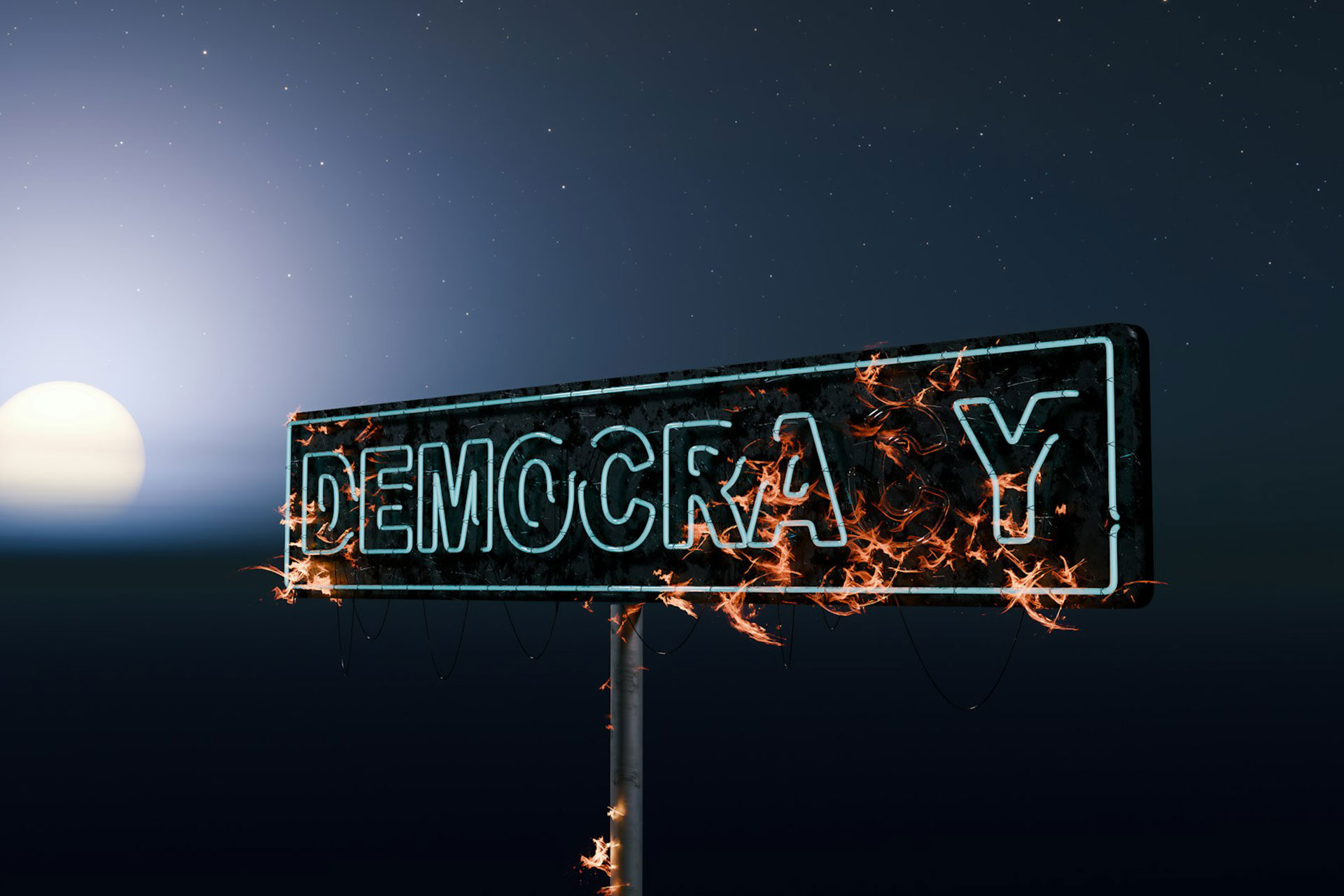
The foundations of our democracy are beginning to crumble — quietly, but unmistakably. Not in distant crisis regions, but right here in countries we thought were unshakeable. As institutions falter, the chorus of those calling for a “strong man” to finally “clean up” — uncompromisingly, quickly, authoritatively — is growing louder. Why is this longing spreading? How are democracies around the world feeling the pressure and which developments should be particularly alarming to us?
 © unsplash / Steve Johnson
Democracy on the retreat
Democratic standards are disappearing worldwide: According to the latest report by the V-Dem Institute, more people now live in authoritarian states than in genuine democracies.
In addition, the decline in freedom of expression, free press and fair elections in particular shows how fragile the democratic structure of many states has become. According to V-Dem the state of freedom of expression deteriorated in 35 countries in 2023 — one of the most dramatic declines in recent history.
This not only reduces the number of democracies — it also undermines confidence in democracy as a truly functioning system.
Causes of pressure on democracy
- Erosion of democratic institutions
Democracies thrive on independent media, a free judiciary and a functioning civil society. But in many places, these institutions are being deliberately weakened. One of the most common strategies of autocratic regimes is media control — censorship, intimidation of journalists, restrictions on civil rights.
- Unfair, manipulated elections
Free elections have long been at the heart of democratic legitimacy — but today they are under threat in many countries. The V-Dem report speaks of a decline in “clean elections” in numerous countries.
When electoral authorities no longer have any leeway and democracy degenerates into a farce, the system loses its credibility — and people turn to alternative forms of power.
- Social reality: inequality, disillusionment, distrust
Democracy sells itself on the basis of justice, participation and freedom. But when economic inequality, social insecurity, disappointment with political elites and opaque decision-making processes prevail, identification with democratic values declines. Pressure on democracy is growing — and with it the desire for a clear, simple order.
- Polarization, disinformation and fear
Modern means of communication, especially social media, contribute to the disintegration of societies — into echo chambers, mistrust and conspiracy theories. In such decades, those who provide simple answers based on fear, uncertainty and the need for stability win. This makes authoritarian leadership styles attractive.
 © unsplash / Fred Moon
 © unsplash / Jon Tyson
Some current examples
- Viktor Orbán and his country: In several reports, Hungary ranks as one of the countries with the sharpest decline in democratic rights — the media, judiciary and civil society are increasingly coming under control.
- Global statistics make it clear: there are more autocracies than democracies worldwide — according to a study by the Bertelsmann Foundation covering 137 developing and emerging countries, there are currently only 63 democracies, but 74 states are considered autocracies.
- Electoral processes often nothing more than a sham democracy: The decline in the quality of free and fair elections affects many countries — even countries with a formal democratic structure are increasingly losing substance.
Why many people want a “strong man”
When democracy fails — not through revolution or war, but through the slow erosion of freedom — authoritarian leadership seems to many like a salvation from chaos.
A survey by the Pew Research Center shows that in countries where democratic values such as independent opposition or freedom of expression are less firmly established, support for leadership by a strong person or the military is growing.
This explains why, especially in crisis regions, countries with deep economic problems or protracted political crises, there is a growing desire for simplicity, clear order and decisive leadership — even if it comes at the cost of freedom.
Is there still hope?
Yes — the decline of democracy is not a law of nature. According to V-Dem and other studies there are always countries that have restored democratic order after a decline into authoritarianism. Key factors are:
- Strengthening independent institutions (free media, independent judiciary, civil society) — they are the backbone of any democracy.
- Genuine participation and social justice — democracy must be tangible, relevant and effective, not abstract and elitist.
- Political education and awareness — those who understand why democracy is important view populist promises with more skepticism.
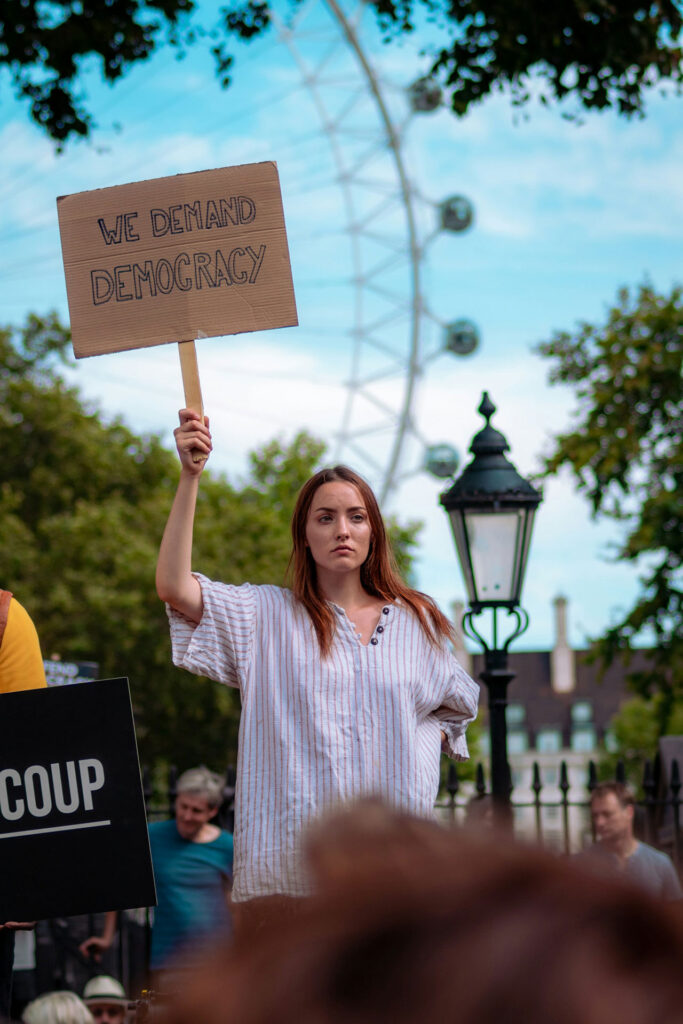
- Committed citizens and active engagement — democracy thrives on participation, not resignation.
Bottom line
Our democracy is in serious crisis – not because it is technically dysfunctional, but because people and institutions have grown weary: weary of empty promises, injustice, manipulation. But retreating to the safe haven of an authoritarian “strong man” is not the solution: he trades freedom for order, co-determination for control.
The positive way out is to revitalize democracy — with courageous institutions, genuine participation, solidarity and engagement. If we are not satisfied with the status quo, but actively participate in shaping it, then democracy can be more than just elections every few years. It can become a vibrant system that empowers, protects and connects people.
Ressources
- Report: The world is becoming increasingly authoritarian, but there is hope: University of Gothenburg
- Democracy Report 2024: V-Dem Institute
- Restrictions to freedom of expression as democracy loses ground: V-Dem Institute
- Democracies Under Pressure – Causes and Strategic Responses from a Global Perspective: KAAD
- The Year of Global Elections: Renew Democracy Initiative
- Democratic backslide a threat to free elections globally: Swedish Research Council
- Only 63 democracies left, but 74 autocracies: Bertelsmann-Study (in German)
- Who likes authoritarianism, and how do they want to change their government?: Pew Research Center