
We’re living in an age of contradictions: In Manhattan poodles nibble on organic kale biscuits while children in Somalia count the hours until their next meal. Humanity grows more than enough food to feed everyone on Earth, yet hundreds of millions still go hungry. How did we build a world where the rich scrape leftovers into the bin and the poor scrape for survival? And more importantly: can we ever fix a system that’s not only immoral, but also eating the planet alive?
 © unsplash / Steve Knutson
The bare figures on hunger
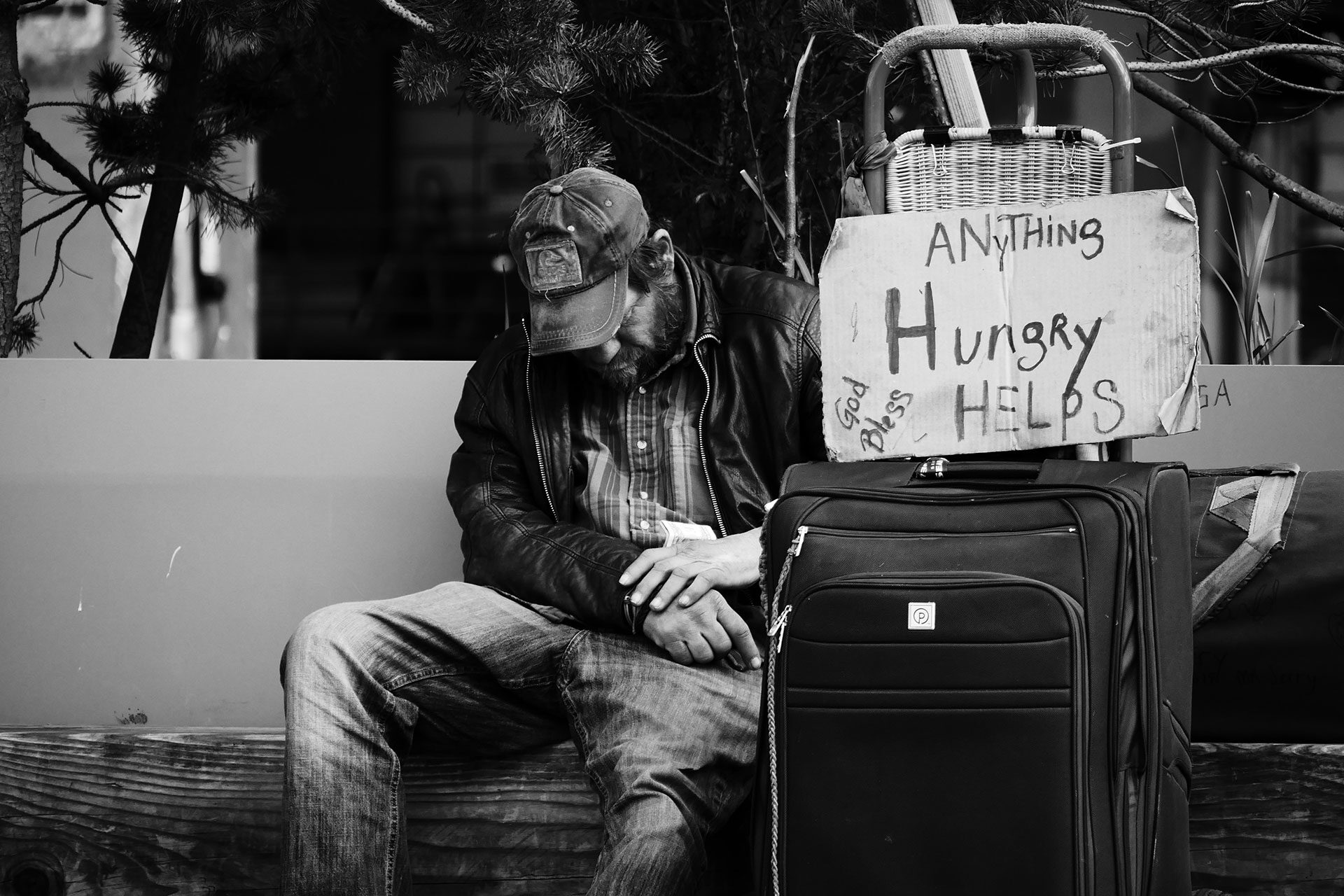
Figures are dry, but these are striking: around 673 million people worldwide suffered from hunger in 2024 – that is over eight percent of humanity. Around 150 million children under the age of five are too small for their age because they are chronically undernourished, and another 45 million are acutely malnourished. The situation is particularly dramatic in sub-Saharan Africa, where around one in five people do not have enough to eat.
The frightening thing about this is that it’s not food that is lacking, but justice. The world is not an empty refrigerator – it’s a poorly distributed one.
When wealth causes hunger
Hunger is no longer a natural phenomenon, but rather a consequence of political, economic and social decisions. Where conflict, extreme weather and poverty converge, food becomes a commodity that only a few can afford. Around 2.6 billion people worldwide cannot afford a healthy diet — not because there is a shortage of food, but because wealth and prices are unevenly distributed.
At the same time, where food is abundant, it’s treated as a lifestyle accessory. We post “food porn” while elsewhere children are literally starving. This is no coincidence – it’s systemic.
 © unsplash / Joseph Gonzalez
 © unsplash / Paul Schellekens
The throwaway society
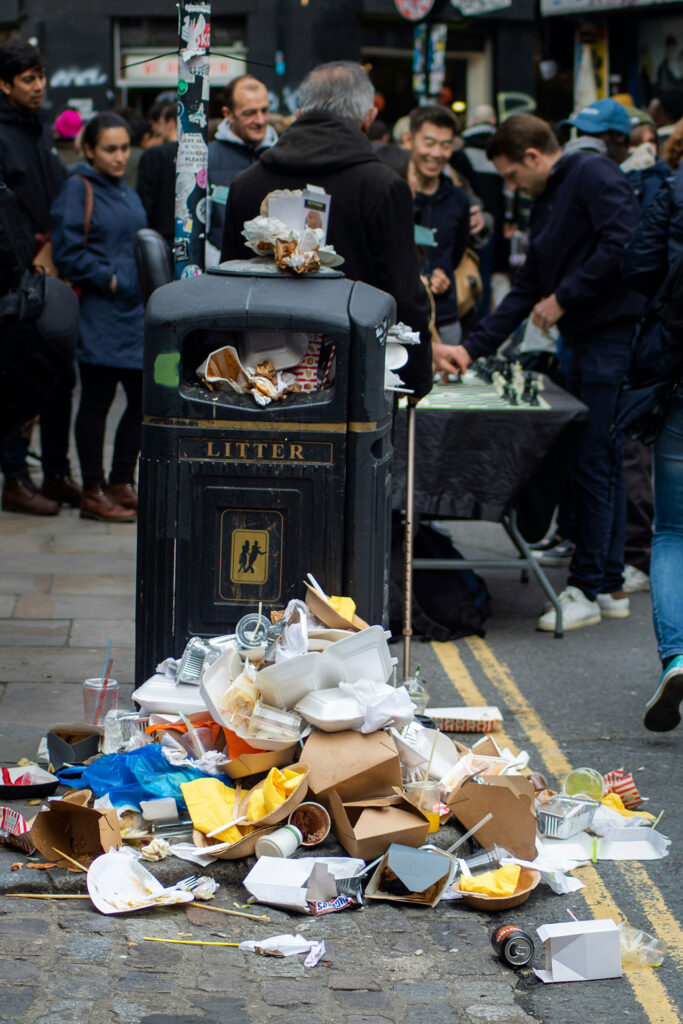
In rich countries, food is not eaten but thrown away: around 1.05 billion tons of food ends up in the trash every year – almost 20% of global production. In the EU, the figure is 58 million tons per year, or around 130 kilograms per capita. At the same time, millions of Europeans can’t afford a balanced meal.
It’s like turning off the lights to save electricity on the one hand and leaving the toaster running on the other because it glows nicely.
We’re all part of the problem
The paradox: we know how to solve the problem. We just don’t do it consistently. Food could be passed on instead of thrown away. Agriculture and trade could be made fairer. Countries could set binding reduction targets for waste – some EU countries are already doing this. And we as consumers could start taking our shopping habits as seriously as we do fitness trackers or streaming subscriptions.
Conscious consumption, better storage, more sustainable production – it sounds unspectacular, but it’s revolutionary when it becomes a habit.
Bottom line
Hunger is not fate, but a choice. One that we as humanity make every day – through our politics, our markets and our behavior. If we stop treating food as a disposable product and start to see it as a shared resource, the luxury of the few could become the basis of life for the many.
Because the math is actually quite simple: if we waste less, others will go hungry less. And that would be – in the truest sense – the most equitable meal humanity has ever served.
Ressources
- The State of Food Security and Nutrition in the World 2025: UNICEF
- Global nutrition targets 2025 – anaemia: WHO
- World hunger: the problem: Save the Children
- Hunger Numbers Stubbornly High for Three Consecutive Years as Global Crises Deepen: UN Report
- 130 kg of food wasted per person annually in the EU: eurostat
- 783 million people face chronic hunger. Yet the world wastes 19% of its food, UN says: Associated Press
- Food waste in Europe: facts, EU policies and 2030 targets: European Parliament