
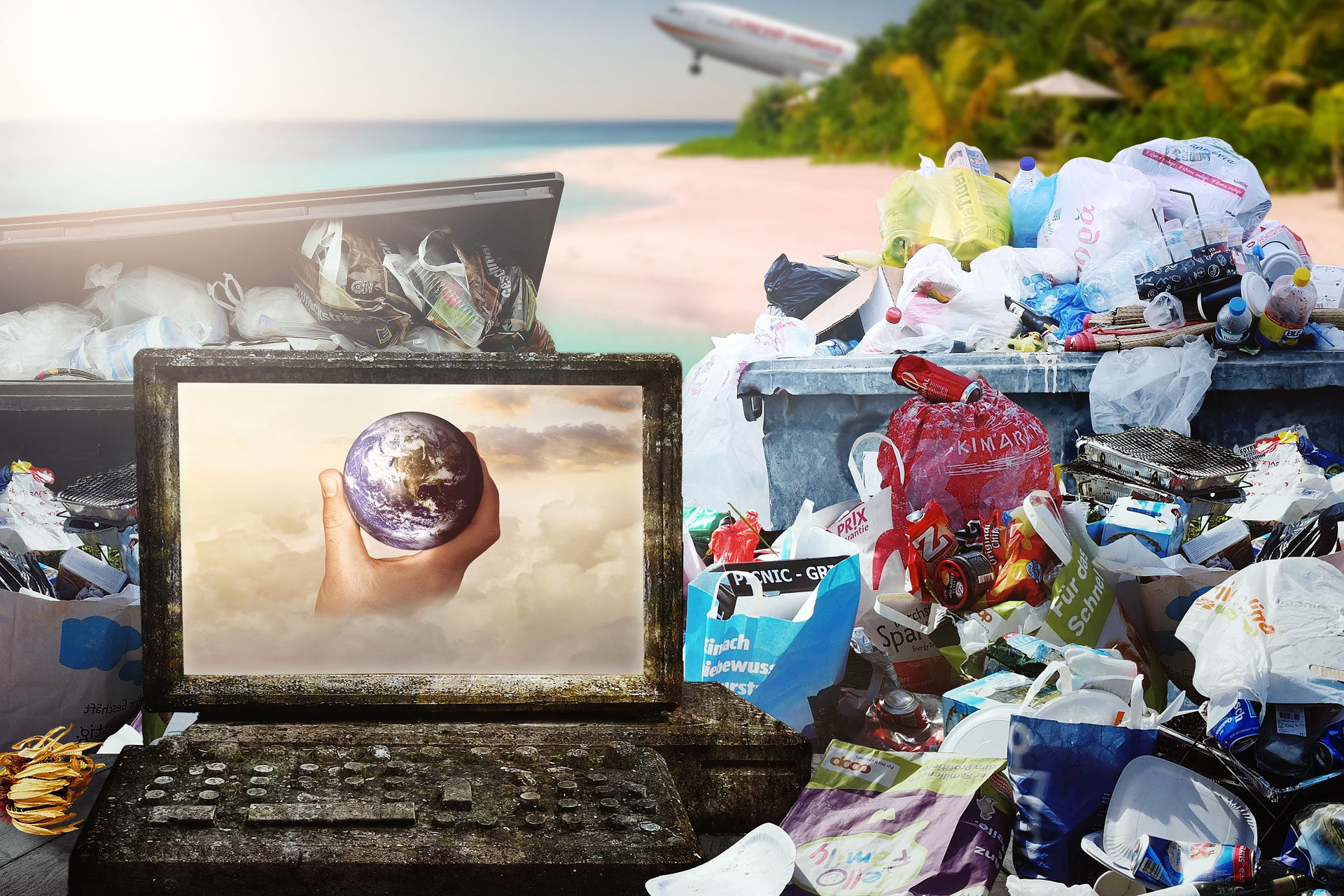
Imagine this: in a few decades, there will be more plastic than fish in the sea. Sounds exaggerated? Unfortunately not. Microplastics are now found in water, in the air — and even in the human brain. What began as a cheap revolution in the packaging industry has developed into a global environmental and health crisis.
 © pixabay / Darmoon_Art
Why we love plastic
Plastic is a master of disguise. It’s cheap, light, flexible, waterproof and can be molded into almost any shape. This is precisely what makes it the superstar of mass production. Packaging, furniture, clothing, electronics, car parts, medical devices — without plastic the modern world would be almost unimaginable. Its big advantage: it lasts forever. And that’s where the problem begins.
The plastic stranglehold
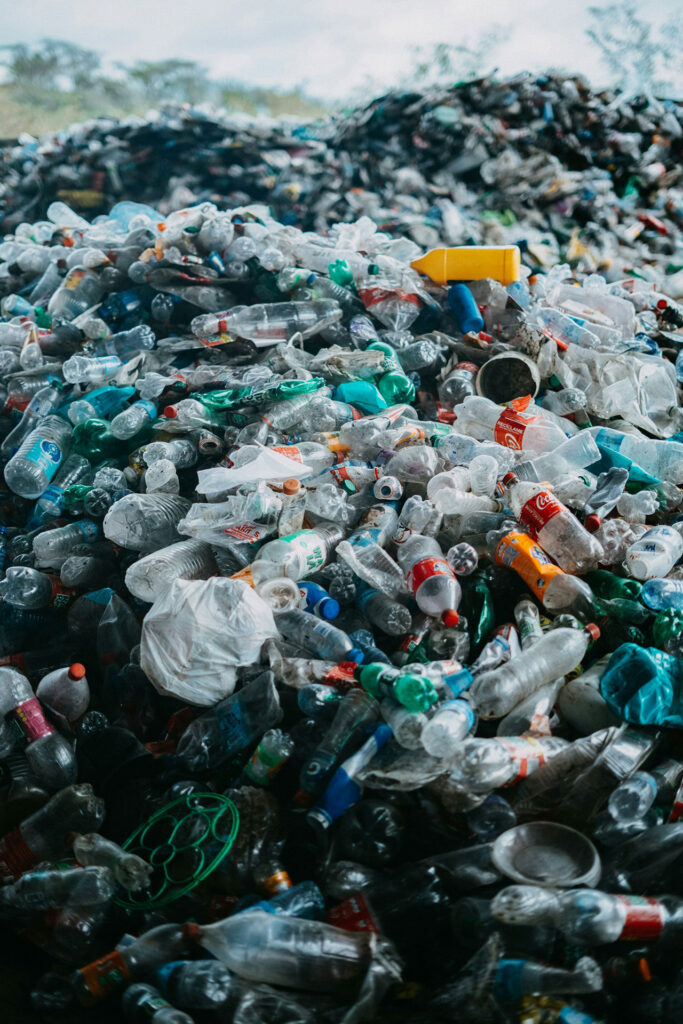
According to Greenpeace 8 to 12 million tons of plastic end up in the world’s oceans every year. The so-called “Great Pacific Garbage Patch” – a gigantic garbage vortex between California and Hawaii – now contains more than 1.8 trillion pieces of plastic. And that’s just one example.
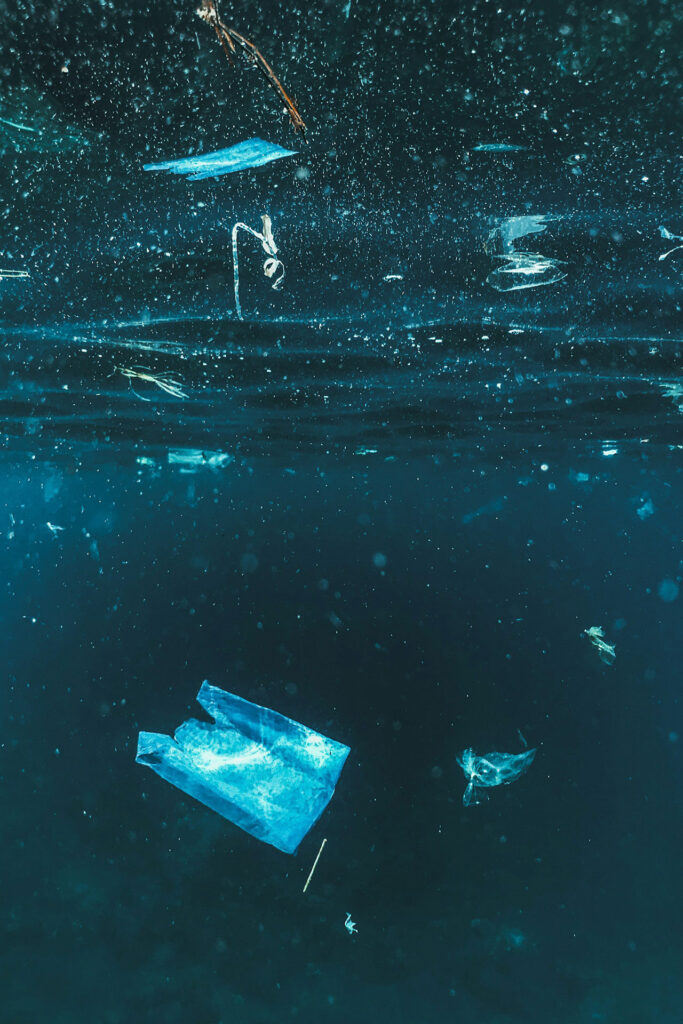
It’s estimated that between 75 and 199 million tons of plastic are currently floating in the sea. Much of it breaks down into microplastics – tiny particles that are almost impossible to remove from the environment.
 © unsplash / Elbert Lora
 © unsplash / Naja Bertolt Jensen
Microplastics in humans
Microplastics are smaller than 5 mm, often even microscopic. They are created by abrasion (e.g., from car tires), washing synthetic fiber clothing, or the decomposition of larger pieces of plastic. And they are everywhere: in drinking water, food, the air – and as recent studies show, even in the human brain.
According to a 2024 study microplastic particles are found in every brain sample tested – in some cases in higher concentrations than in the liver or kidneys. The long-term consequences? Not yet fully researched, but evidence points to inflammation, disruption of the blood-brain barrier and possible cognitive impairment.
How bad is it really?
Since the 1950s over 8.3 billion tons of plastic have been produced – of which an estimated 6 billion tons are waste. Most of it is either in landfills or in the environment. Every minute, about one truckload of plastic is dumped into the oceans worldwide.
What we need to do now
- Avoid plastic: Use fewer disposable products, choose reusable instead of disposable and use alternatives such as glass, stainless steel or biodegradable materials.
- Strengthen recycling: Improve infrastructure, promote the circular economy and oblige manufacturers to take responsibility.
- Tighten legislation: Bans on microplastics in cosmetics, clear labeling requirements, international agreements against plastic waste.
- Change consumer behavior: Shop consciously, choose products with less packaging, support sustainable brands.
- Promote innovation: Develop new materials, microplastic filters for washing machines and recycling technologies.
Bottom line
Plastic is a masterpiece of modern industry — but it has long since spiraled out of control. We are surrounded by a material that does not decompose, but breaks down into smaller and smaller pieces until it ends up inside us. The solution is not rocket science: consume less, produce smarter, regulate by law.
Ressources
- Key Facts on Plastic and Climate: Greenpeace
- Ocean Pollution Facts: Statistics & Rankings (2025): GreenMatch
- Clean Seas Campaign: UN Environment Programme
- Alarming levels of microplastics found in human brains: National Geographic
- Levels of microplastics in human brains may be rapidly rising, study suggests: The Guardian