
We live in the age of AI, map the human genome and reach distant planets, and yet still wage wars like we did a thousand years ago. Why do we still resolve conflicts with violence? Let’s explore the question of what prevents us from becoming more peaceful — and what we could do about it.
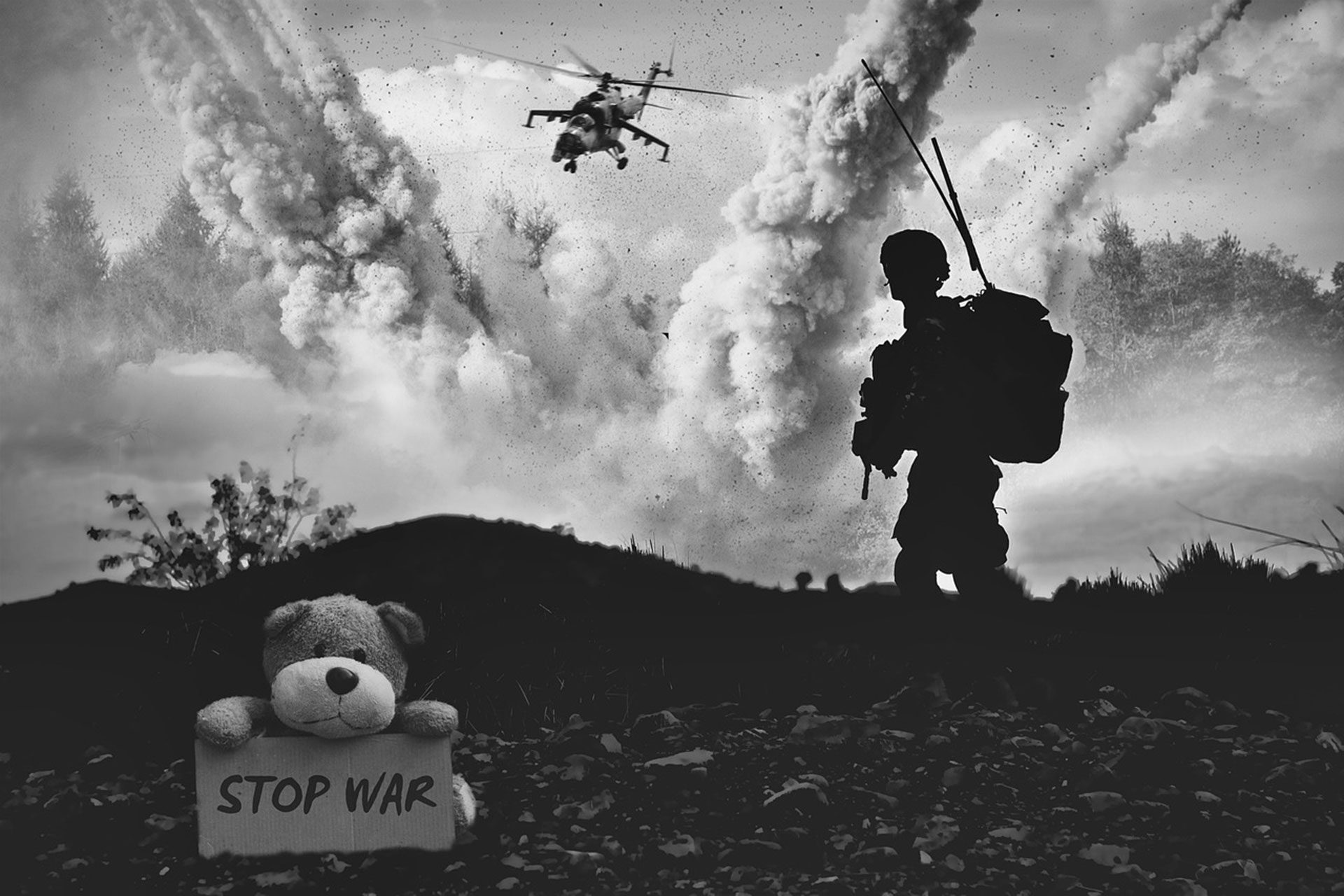 © pixabay / ELG21
War in the age of Wi-Fi
It’s 2025. We carry supercomputers in our pockets, map genomes in weeks, and talk about Mars as casually as weather. And yet — people still kill each other over land, pride, power. From Ukraine to Gaza, Tigray to Sudan, conflict remains a global epidemic. According to the Peace Research Institute Oslo, war-related deaths have reached a 30-year high. Civilians pay the highest price. Over 122 million people are displaced. The UN warns: the rules of war are “being shredded.”
Why we still fight
Some explanations go way back. Evolutionary psychologists suggest violence was once adaptive: tribes that defended themselves, survived. That primal wiring still lingers in how humans respond to fear and threat.
 © Adobe Firefly
But modern wars are rarely about survival. They’re about injustice. Where inequality festers, where people are excluded from power or dignity, violence often follows. Climate collapse, political corruption, and poverty turn tension into conflict. War is often a symptom — not the disease.
There’s also something more existential: the human need for meaning. When people feel invisible, powerless or humiliated, some see violence as a path to significance. It’s twisted logic — but tragically real.
It doesn’t have to be this way
Violence is not our destiny. It’s a choice — often made by the few at the expense of the many. Peace isn’t naïve; it’s underfunded. The UN urges more political courage, more mediation, more prevention. But peace doesn’t trend.
Bottom line
There’s hope. History shows: when dialogue replaces dominance, when justice matters more than control, violence loses its grip. The world doesn’t need more weapons. It needs more empathy — and leaders who believe that war is not inevitable. I believe in that possibility. And in the power of words to move us there.
Ressources
- Wars have now displaced over 122 million people as aid funding falls, UN says: Reuters
- An evolutionary perspective on the current wars: Cambridge University Press
- Root Causes of Violence and War: Understanding Human Conflict: PolSci.Institute
- Psychology expert: Why extremists use violence in their quest for significance: The Conversation
- Red Cross denounces lack of conflict mediation as aid needs explode: Reuters