
We live in an age of abundance. Supermarkets throw away tons of food, fashion chains release new collections every week, electronics are replaced even though they still work and huge parking lots are filled with new cars for which there aren’t even any buyers yet. The modern economy seems to follow a simple principle: produce, sell, replace — and start all over again. But how much longer can our planet sustain this system?
 © pixabay / bakhrom media
Why does production keep increasing?
It actually sounds absurd: Why produce more than is needed? The answer lies in today’s economic system. Companies compete globally for market share, economies of scale lower production costs and investments often pay off only when large quantities are produced. At the same time, demand is driven by advertising, trends and ever-shorter product cycles. The goal of many companies is not to meet demand exactly, but to achieve growth — because that’s what investors, stock markets and company valuations are focused on.
Excess as business model
This problem is particularly evident in the fast-fashion industry. Every year, over 100 billion garments are produced — many of which are worn only a few times. The same applies to electronics: smartphones, televisions and laptops are replaced even though they still function perfectly well. Food is also affected. According to the United Nations, about one-third of the food produced worldwide is wasted, while millions of people suffer from hunger. Even in the automotive industry, overcapacity occasionally arises when manufacturers anticipate future demand or seek to utilize production facilities to full capacity.
Who’s responsible?
There is no single culprit. Companies produce because they need to make a profit. Consumers buy because low prices, convenience and constant advertising encourage consumption. Policymakers set the framework, while investors expect continuous growth. Overproduction is therefore less a failure of individuals than the result of a system that often measures economic success by revenue — not by resource conservation.
 © unsplash / Alejo Reinoso
 © unsplash / Ryan Searle
The high price of abundance
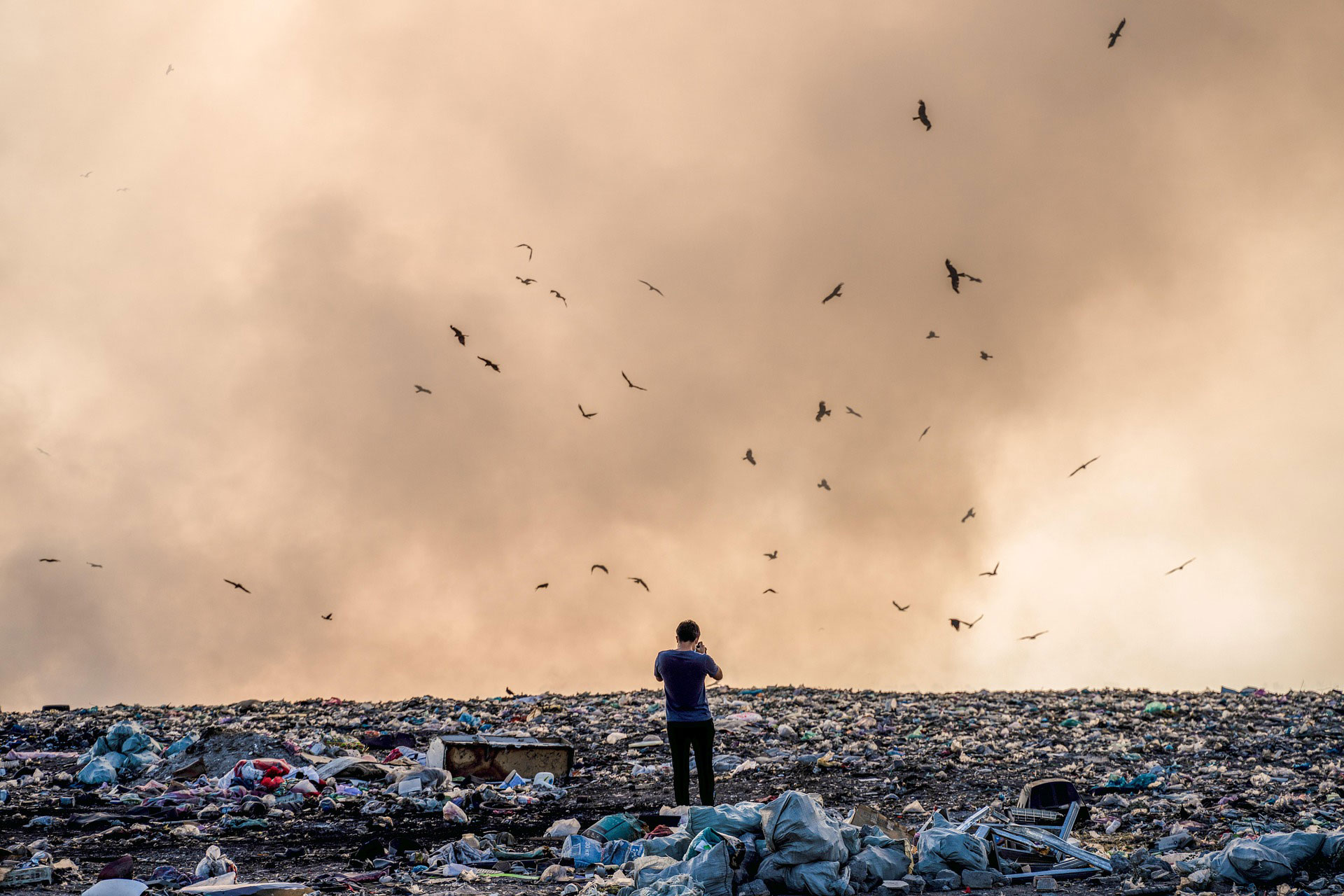
The consequences are enormous: Raw materials, energy and water are consumed to manufacture unnecessary products, while at the same time mountains of waste are growing and greenhouse gases are being emitted. Added to this are social issues. While functional products are discarded in affluent countries, elsewhere people lack access to basic goods. Morally, this raises difficult questions about responsibility, justice and the management of finite resources.
Is there a shift in thinking?
In fact, there are initial positive signs. The circular economy is gaining importance, secondhand platforms are booming, repair is making a comeback and more and more companies are focusing on longer-lasting products or take-back systems. Political initiatives — such as stricter recycling requirements or the right to repair — also show that sustainability is increasingly becoming a competitive factor.
Bottom line
Overproduction is not a law of nature. It‘s the result of economic decisions — and can therefore be changed. If companies prioritize quality over quantity, policymakers create sustainable framework conditions and consumers make more conscious purchasing decisions, the throwaway society can gradually evolve into a circular economy. After all, true progress doesn‘t lie in producing more and more, but in using existing resources more wisely. Because the most sustainable product is often the one that doesn’t need to be manufactured in the first place.
Ressources
- Technical Platform on the Measurement and Reduction of Food Loss and Waste: Food and Agriculture Organization of the UN
- Making the circular economy real: Ellen MacArthur Foundation
- What a Waste 3.0 – Global Snapshot of Solid Waste Management toward Circularity until 2050: World Bank Group
- Global Material Resources Outlook to 2060: OECD