
Human trafficking sounds like a dark chapter from centuries past — evoking images of slave ships, chains and colonialism. But the bitter truth is this: the human trafficking trade is booming — right in the middle of the 21st century. Today, traffickers no longer wear pirate hats; instead, they wear suits and use social media, fake job offers or smuggling networks. And while we discuss AI, Mars missions and digital freedom, millions of people worldwide are being sold, exploited and rendered invisible.
 © unsplash / Nika Gard
From slavery to a global shadow industry
Human trafficking is as old as humanity itself. Even in ancient times, people were traded as property. Transatlantic slavery later turned this into a massive economic system. Slavery was officially abolished in the 19th century — but it never disappeared.
Today, we speak of “modern slavery.” This includes forced labor, sexual exploitation, child trafficking, organ trafficking and forced marriages. According to the International Labour Organization and Walk Free, approximately 49.6 million people were living in modern slavery in 2021. Of these, 27.6 million were victims of forced labor and about 22 million of forced marriage.
Particularly shocking: millions of children are affected. According to current UN reports, minors account for about 38 percent of identified victims of human trafficking.
Billions from human suffering
Human trafficking is now one of the most profitable illegal businesses in the world — alongside the drug and arms trades. The International Labour Organization (ILO) now estimates annual profits from forced labor at around 236 billion U.S. dollars. Sexual exploitation alone accounts for nearly three-quarters of these illegal profits.
People are treated like disposable goods: acquired cheaply, exploited to the maximum and interchangeable. Those living in poverty, fleeing conflict or lacking social security are particularly at risk. Wars, climate crises and migration further exacerbate the problem.
The invisible
Accurate figures on missing persons worldwide are scarce. The International Commission on Missing Persons points out that millions of people disappear due to conflicts, organized crime, migration or human trafficking. Many are never seen again.
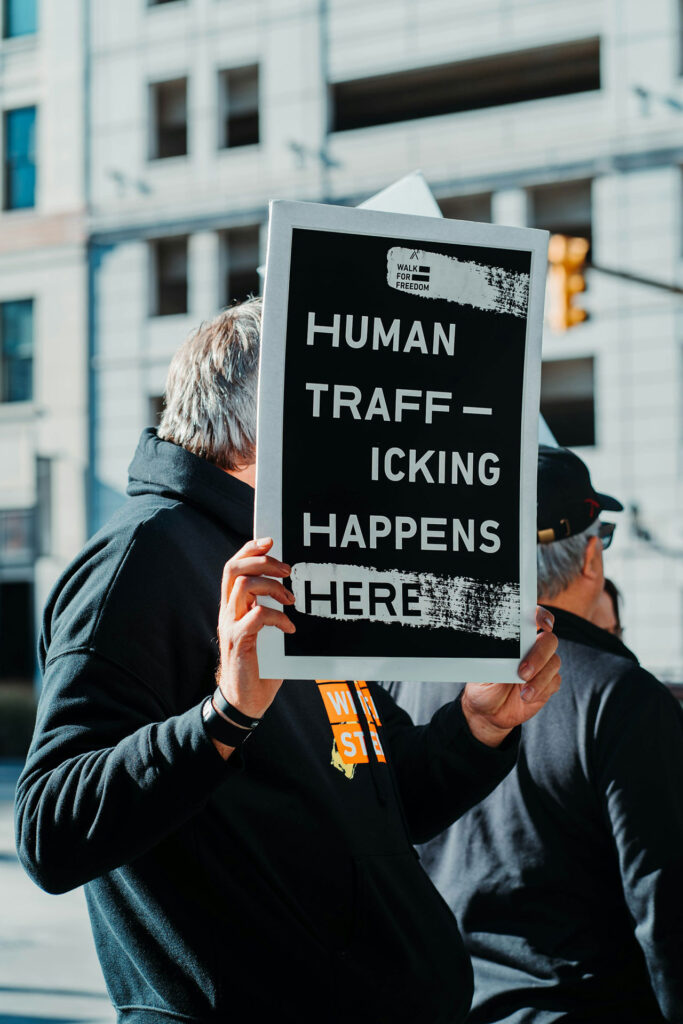
The grim reality: human trafficking often works so well because the victims remain invisible. They work in illegal brothels, on construction sites, in private households or in factories — often right under our noses.
 © unsplash / Hermes Rivera
 © unsplash / engin akyurt
What is being done about it?
Numerous international agreements and laws now exist. The most important is the UN’s Palermo Protocol from 2000. In addition, there are national anti-trafficking laws, stricter controls and international police cooperation.
But laws alone are not enough. As long as poverty, corruption and a lack of prospects exist, human trafficking will remain a massive market. Companies are also coming under increasing pressure to make their supply chains more transparent in order to rule out forced labor.
Bottom line
Even if the situation seems bleak. More and more countries are collaborating internationally, NGOs are rescuing victims from exploitative systems, and digital technologies are helping to uncover networks of perpetrators. At the same time, global awareness is growing that modern slavery is not a distant problem, but exists right in our midst.
Perhaps the most important insight is this: human trafficking thrives on indifference. Every glance, every investigation, every critical inquiry into origin and working conditions can be part of the solution. History shows one thing, at least: societies can learn. Slowly. Painfully. But they can learn that people must never be treated as commodities.
Ressources
- Global estimates of modern slavery: Walk Free
- 50 million people worldwide in modern slavery: International Labour Organisation
- Sexual exploitation drives 37% rise in profits from forced labour: The Guardian
- Number of missing people registered with the Red Cross and Red Crescent Movement up nearly 70% in five years: International Committee of the Red Cross
- UNODC Global Human Trafficking Report 2024: an increase of 25% of victims: United Nations Office on Drugs and Crime
- Poverty, conflict and climate fuel spike in trafficking victims: The United Nations Office of Geneva