
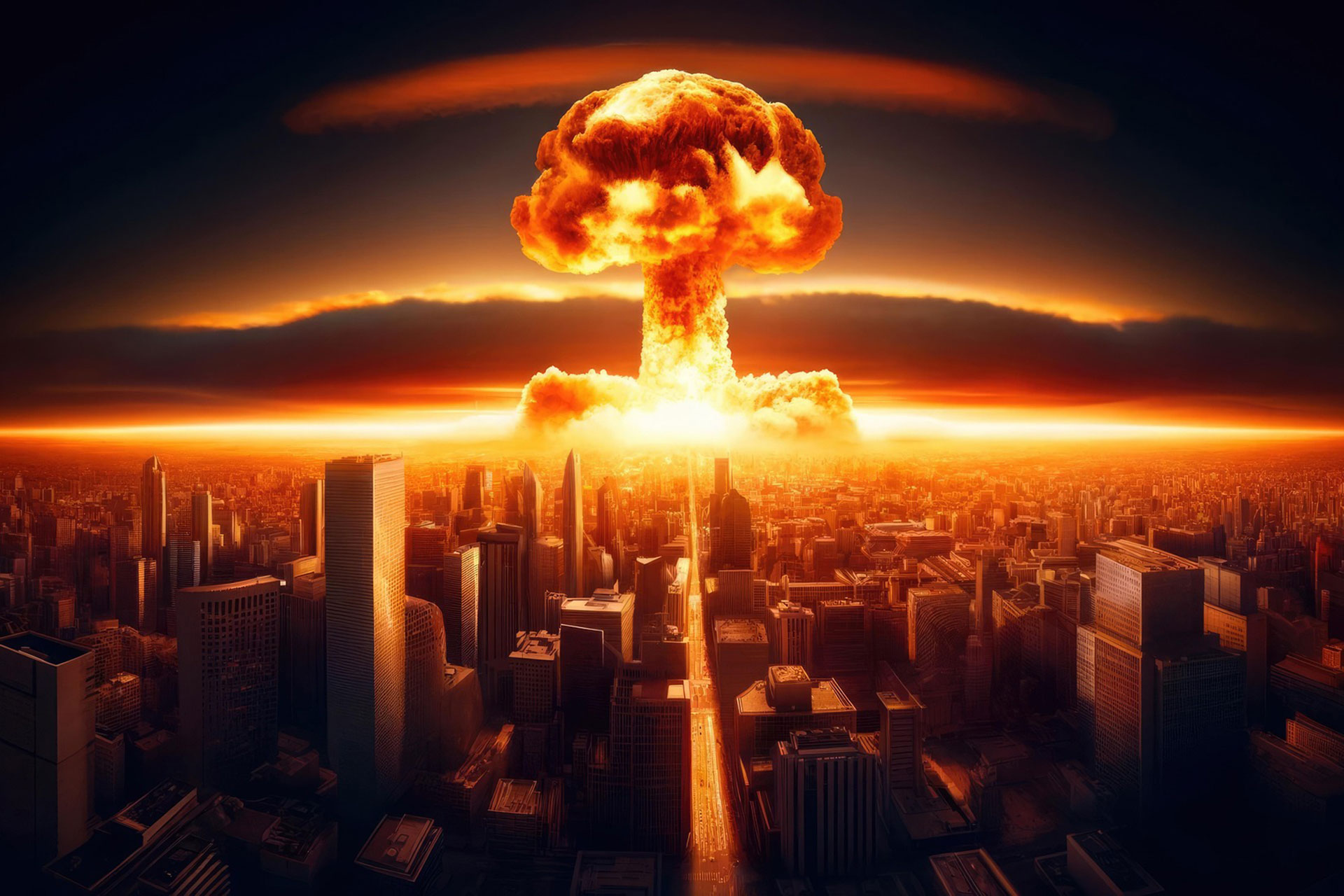
Nuclear weapons are the only human invention capable of ending civilization in a single afternoon. They sit quietly in underground silos, aboard submarines, behind layers of protocol and politics — while the world goes about its business. Built in fear, justified by strategy and maintained out of habit, these weapons have outlived the wars that created them. Why do they still exist? Who controls them today? And how close are we, really, to finding out what happens when deterrence fails?
 © pixabay / Kmeel_com
A brief look at history
After World War II, the Cold War began: the US against the Soviet Union. Nuclear weapons were the poker chip in the global power game. At its peak in the 1980s, there were an estimated 60,000 warheads worldwide – enough to devastate the earth many times over.
Disarmament treaties such as START later reduced these numbers dramatically. But this process has stalled. The last major arms control treaty between the US and Russia has just expired – a “grave moment” for global security, according to UN Secretary-General António Guterres.
Where do we stand today?
Today, there are more nuclear weapons than there were a few years ago – around 12,200 worldwide, distributed among nine countries: the US, Russia, China, France, the UK, India, Pakistan, Israel and North Korea. The US and Russia together possess about 87% of all warheads. Many of these weapons are on “high alert” – they could be launched within minutes.
| Country | Estimated total number |
|---|---|
| Russia | ~5,459 |
| US | ~5,177 |
| China | ~600 |
| France | ~290 |
| United Kingdom | ~225 |
| India | ~180 |
| Pakistan | ~170 |
| Israel | ~90 |
| North Korea | ~50 |
Source: Federation of American Scientists 2025
Will there be more or less?
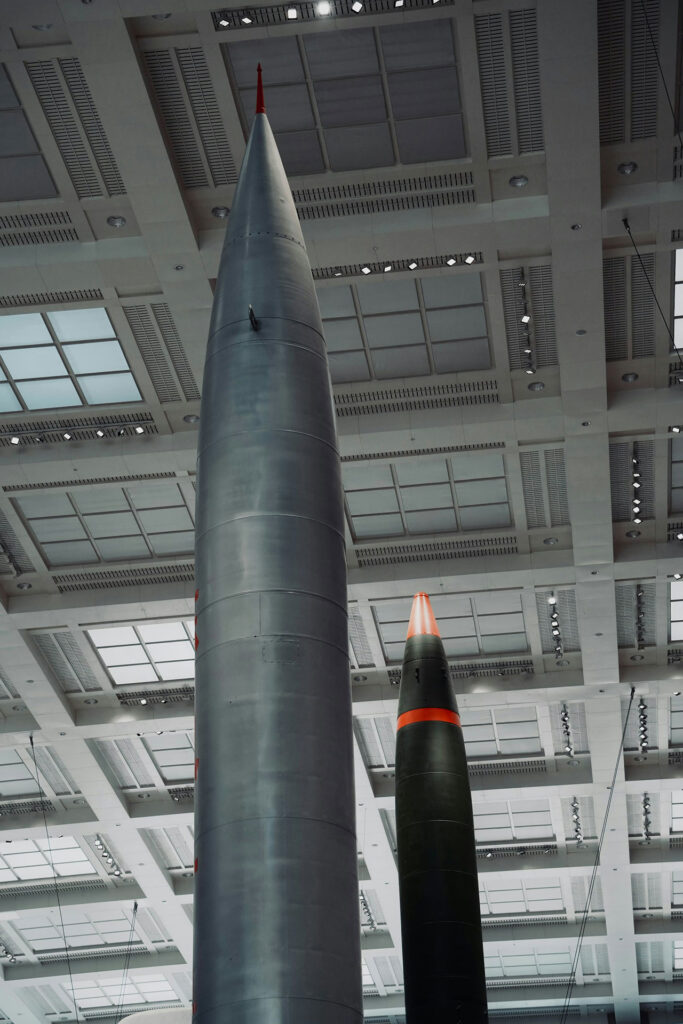
Unfortunately, the trend is pointing upwards again. After the long-term decline since the end of the Cold War has stalled, countries such as China in particular are expanding their arsenals. Some forecasts predict that China’s stockpile will grow to a level similar to that of the US and Russia by 2035.
At the same time, disarmament treaties are falling apart, reigniting the nuclear arms race.
 © unsplash / Cardia Gong
 © unsplash / Raspopova Marina
How great is the real danger of a nuclear war?
Statistically speaking, a global nuclear war is very unlikely – but by no means impossible. Experts do not pretend that there is any certainty: even small wars or mistakes can escalate. In 2026, the Doomsday Clock stands at just 85 seconds before midnight – a symbol of how close the world is to catastrophe.
Years ago, some researchers estimated that a total nuclear war in the 21st century is a measurable probability – with enormous consequences.
What would a nuclear war mean?
The impact of a single nuclear bomb exceeds anything imaginable: it destroys infrastructure, kills millions and leaves behind radioactive contamination for decades. No modern healthcare system would be prepared for such an event, and the global consequences would extend far beyond the immediate combat zones.
A glimmer of hope at the end
Despite everything, all is not lost. International civil movements are campaigning for a nuclear weapons ban treaty, and historic disarmament successes show that reduction is possible. Diplomacy, transparent control, dialogue platforms between major powers and regional confidence-building can counteract the nuclear arms race. In addition, initiatives to strengthen the Nuclear Non-Proliferation Treaty (NPT) and multinational non-proliferation agreements are gaining in importance — if they are seriously enforced.
Bottom line
Nuclear weapons are remnants of 20th-century thinking that are coming back to haunt us in the 21st century. Yes, they are dangerous and difficult to control – but human history has also shown that even the most complex problems can be solved through cooperation, reason and political innovation. So let’s not just marvel at the abyss – let’s take active steps to bridge it.
Ressources
- Status of World Nuclear Forces: Federation of American Scientists
- Number of nuclear warheads worldwide from 1945 to 2025: statista
- UN chief calls New START expiration ‘grave moment’: Reuters
- Risk of nuclear war grows amid new arms race: Deutsche Welle
- China stockpiling nuclear warheads at fastest rate globally, new research shows: The Guardian
- The last US-Russian nuclear pact is about to expire, ending a half-century of arms control: Associated Press
- Nuclear holocaust: Wikipedia