
The broken school bathroom has long since become a symbol. Cancelled classes are now part of everyday life, teachers are working at their limits, and more and more children are leaving school with gaps in their education that are nearly impossible to fill later on. While governments invest billions in the military, bank bailouts or tax breaks, cuts are being made precisely where the future is shaped: in education. The consequences aren’t just on the horizon — they’re already here. Poorer opportunities, greater social division, political radicalization and a growing shortage of skilled workers are just a few of the warning signs. The question is no longer whether we’re cutting our way to ruin, but how much these cuts will ultimately cost us.
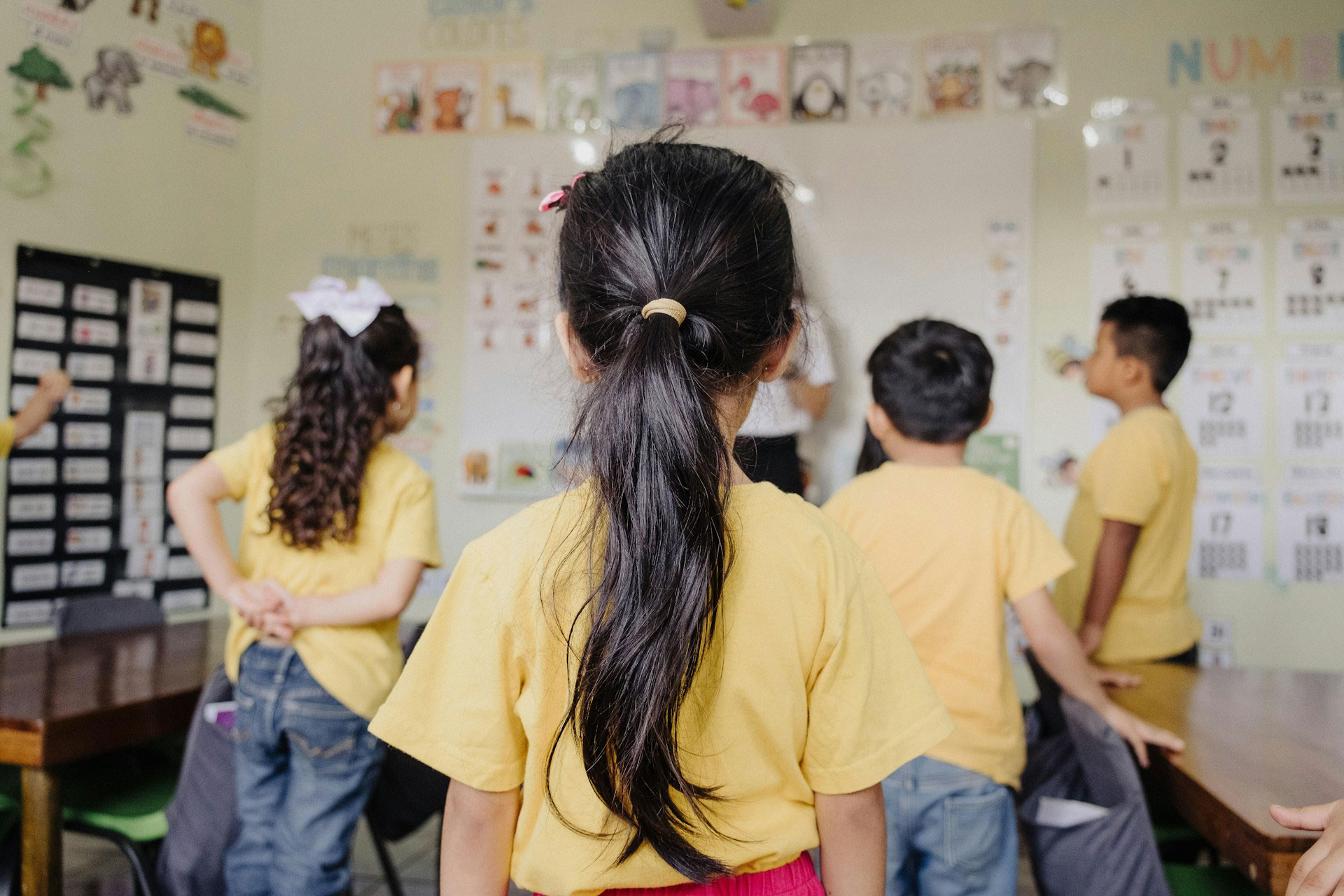 © unsplash / Shelby Murphy Figueroa
Education on the back burner
In many countries, education is now treated as a cost rather than an investment. According to studies, Germany is short tens of thousands of teachers. Schools are dilapidated and digital equipment is often outdated. At the same time, universities are struggling with reduced budgets and rising student numbers.
In the UK, funding for public schools has been slashed for years. Many schools are now even asking parents for voluntary donations for teaching materials. In the U.S., educational inequality is growing dramatically: those who are rich can afford good schools — those who are poor often fall behind. The trend is particularly drastic in countries like Argentina or Brazil, where inflation and austerity programs are having massive impacts on schools and universities.
The figures are alarming
The OECD has been warning for years about declining skills in reading, math and science. The latest PISA results show significant declines in many industrialized nations. In Germany, students recently achieved the lowest scores since the comparative studies began.
Particularly alarming: According to UNICEF, millions of children worldwide cannot read adequately or solve simple math problems, even though they have attended school for several years. At the same time, the number of young people without a completed education is rising in many countries.
Education is thus increasingly becoming a social issue. Those from poor families are particularly affected by budget cuts. If there‘s no money at home for tutoring, technology or quiet study spaces, poor schools can hardly be compensated for.
 © unsplash / Erik Mclean
 © unsplash / Oliver Hale
Feeling the consequences
The effects extend far beyond the classroom. Companies are finding it increasingly difficult to find qualified skilled workers. Democracies are suffering from growing disinformation and political polarization. Those who have a poorer understanding of complex issues become more susceptible to populism and simplistic slogans.
These conditions also take a psychological toll. Overcrowded classrooms, pressure to perform and a lack of support place a massive burden on children and young people. Teachers are leaving the profession, and parents are despairing of a system that offers less and less support.
Why are cuts being made here of all places?
The answer is uncomfortable: education often yields political gains only years later. Austerity measures, on the other hand, have an immediate impact on the budget. At the same time, the wealthy in many places continue to benefit from tax breaks, while public systems are being hollowed out. Critics have long been speaking of a dangerous shift: away from equal opportunity, toward an education system that cements social differences.
Bottom line
Yes, there’s a way out oft he misery — but only if education is once again seen as a societal priority. Countries like Finland show that long-term investments in schools, teachers and early childhood education can have an enormous impact. What is needed is better pay for teachers, modern infrastructure, smaller class sizes and targeted support for disadvantaged children.
Above all, however, a shift in perspective is needed: education is not a luxury that one can afford only in good times. It is the foundation upon which societies function at all. Those who cut school funding today will pay the price tomorrow — economically, socially and democratically.
Ressources
- Directorate for Education and Skills: OECD
- Education and justice: Learning to build just societies: UNESCO
- The State of Global Learning Poverty: UNICEF
- Pay-as-you-go schooling: parents under pressure to fund essentials: The Guardian
- U.S. public schools brace for ‘fiscal cliff’ after surge in hiring meets budget shortfalls: CNBC
- Department for Education ‘lacks coherent plan’ to address teacher shortage: Sky News
- Most schools ‘can’t afford the basics’: tes magazine